

Medicare And
Benefit Considerations

Protect The Settlement. Consider The Benefits.

How settlement proceeds are received can be just as important as how much is received.
A settlement can provide important financial security—but it may also affect eligibility for certain government benefits.
When Medicare, Medicaid, Supplemental Security Income (SSI), or other needs-based benefits are involved, careful planning can help address program requirements while protecting the value and purpose of the settlement.
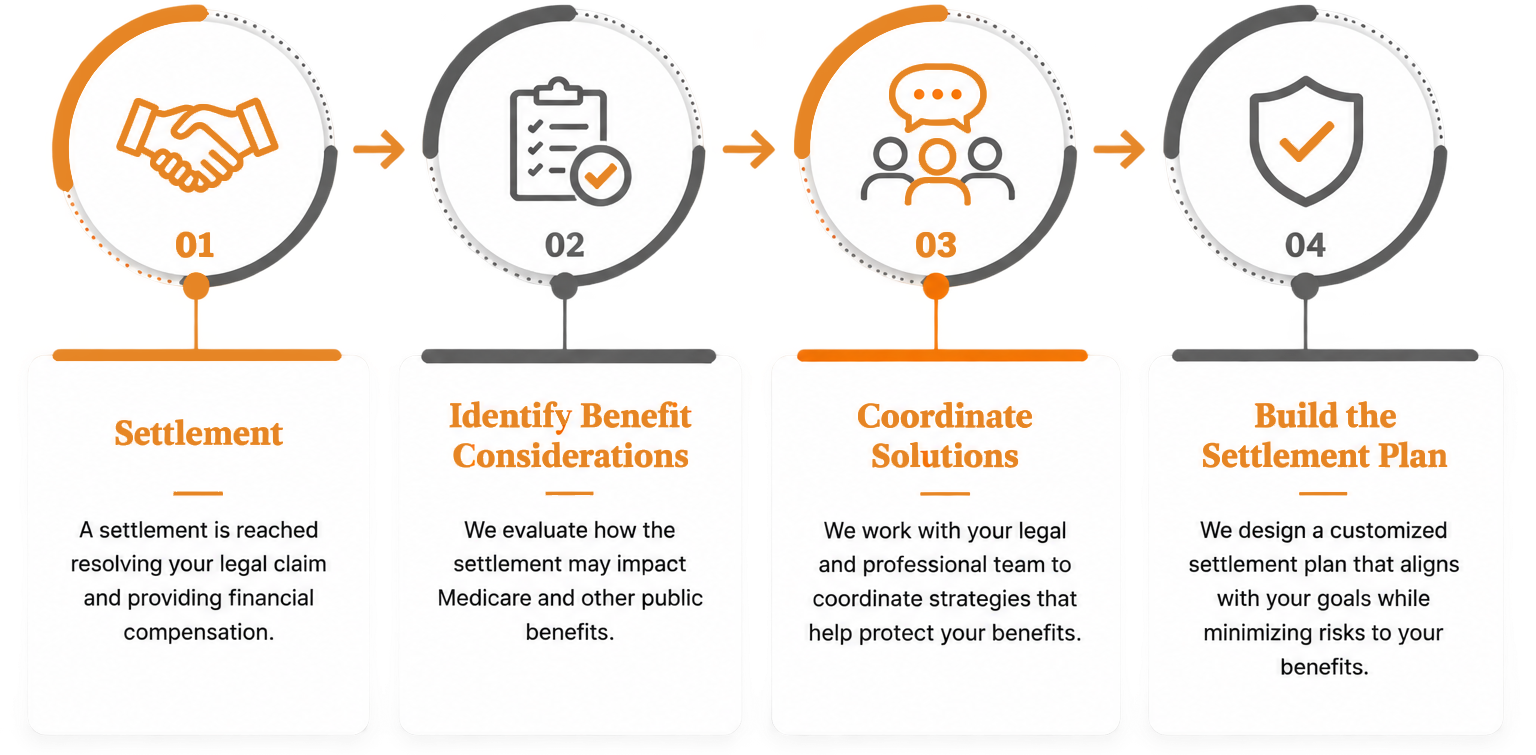
Ringler Consultants help identify these considerations early and coordinate with the appropriate settlement professionals to develop strategies tailored to the individual and the case.
Why Government BenefitsMatter at Settlement
Not all government benefits are treated the same way. Some are based on eligibility factors such as age or work history, while others have strict income and asset limits.

Depending on the individual and the circumstances of the case, settlement planning may need to consider:
- Medicare eligibility and Medicare’s interests in future medical expenses
- Medicare Set-Asides (MSAs) when appropriate
- Medicaid and SSI eligibility
- Special Needs Trusts or other trust solutions
- Professional administration of certain settlement funds
- Future medical and long-term care needs
- Lifetime payments
- Coordination between structured settlement payments, trusts, and other settlement resources
Understanding these issues before the settlement is finalized can provide more options for creating an effective plan.
Medicare: Planning for
Future Medical Needs

When a settlement includes compensation for future medical expenses, Medicare’s interests mayneed to be considered.
Depending on the case, a Medicare Set-Aside may be used to allocate settlement funds for future medical expenses that would otherwise be covered by Medicare. A structured settlement can be an important funding option for an MSA, providing scheduled payments designed to help fund anticipated medical expenses over time.
Ringler Consultants can work with the parties and appropriate Medicare specialists to help coordinate a settlement strategy that considers both current and future needs.

Preserving Needs- Based Benefits
For individuals who receive—or may become eligible for—needs-based government programs such as Medicaid or SSI, receiving settlement proceeds directly may affect eligibility.
Settlement planning can bring together strategies such as structured settlements and Special Needs Trusts to help address an individual’s financial needs while considering continued eligibility for important benefits.
Bringing the Right Resources Together
Medicare and government benefit requirements can be complex, and every situation is different. Your Ringler Consultant can help identify potential issues and coordinate with attorneys, Medicare specialists, trustees, professional administrators, lien resolution professionals, and other experts as appropriate.
The goal is a coordinated settlement strategy that considers the whole picture—not just the settlement itself.
Consider Benefits Before the Settlement Is Final
Government benefit considerations are best addressed before settlement decisions become final. Identifying Medicare, Medicaid, SSI, and other potential issues earlier can provide more time to evaluate available strategies and coordinate the resources needed to implement them.
Depending on the case, a Medicare Set-Aside may be used to allocate settlement funds for future medical expenses that would otherwise be covered by Medicare. A structured settlement can be an important funding option for an MSA, providing scheduled payments designed to help fund anticipated medical expenses over time.